
Private Detective vs. Police in Spain: Key Differences and When to Turn to Each
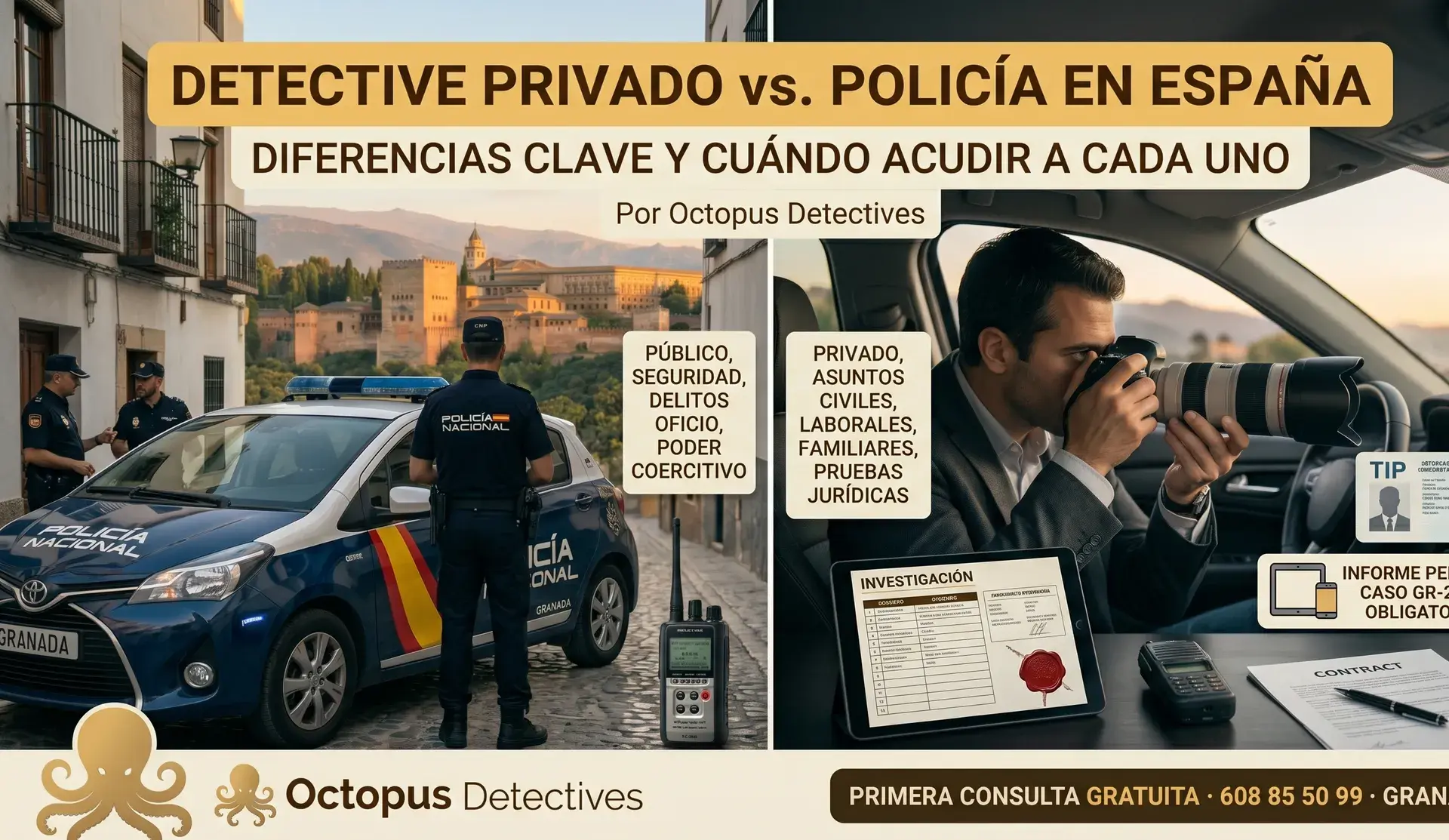
One of the most common questions we receive is: "Can't the police do this?" It is a legitimate question and deserves an honest answer. In Spain, the police and a private detective have clearly differentiated roles, powers and jurisdictions — and in many situations, only one of the two can actually help you.
What the police can do (and a detective cannot)
- Access private databases without judicial authorisation (criminal records, vehicle registrations, internal police intelligence).
- Issue fines and summons, carry out arrests, execute search warrants.
- Intercept communications — with judicial authorisation.
- Act on criminal matters: theft, assault, drug offences, fraud reported as a criminal complaint.
If you have been the victim of a crime and want the perpetrator prosecuted, go to the police (or the Guardia Civil). They have the criminal investigation tools that a detective does not.
What a detective can do (and the police cannot or will not)
- Investigate civil and family matters: infidelity, child custody, maintenance payments, cohabitation verifications. The police do not get involved in these cases.
- Gather evidence for employment proceedings: sick-leave fraud, internal theft, unfair competition. The police will not investigate a sick employee just because a manager suspects fraud.
- Provide surveillance and follow a person (in public spaces, legally) at the client's request — without needing a crime to be reported first.
- Produce an expert report directly usable by your solicitor in civil, family or labour proceedings, without having to go through criminal channels first.
- Act quickly on a private client's instruction: the police prioritise criminal investigations; a detective prioritises your specific case.
The key practical distinction
Police gather evidence for the State's criminal prosecution. A detective gathers evidence for your civil or family proceedings. The police will not investigate your spouse's infidelity for your divorce; the detective cannot arrest your neighbour for harassment. Both work within the law, but in different spheres.
In practice, the choice is often clear: if it is a crime that will be prosecuted criminally, you report it to the police. If you need evidence for a family court, labour tribunal or civil proceedings — where the State is not the party — you hire a detective.
Can they work together?
Yes, and it is more common than people think. In corporate fraud cases, for example, a detective investigates the employee's activities, the company reports to the police using that evidence, and both proceedings run in parallel. In custody disputes, the detective's report goes to the family court while, if there is also a risk to the child, a simultaneous complaint to the police and social services may be appropriate.
Summary: when to go to the police and when to hire a detective
| Situation | Police | Detective |
|---|---|---|
| Criminal offence (theft, assault) | ✓ | — |
| Marital infidelity (divorce) | — | ✓ |
| Sick-leave fraud | — | ✓ |
| Child custody evidence | — | ✓ |
| Locating a missing person | ✓ (if reported) | ✓ (civil cases) |
| Asset concealment in divorce | — | ✓ |
| Internal business fraud | ✓ (criminal) | ✓ (evidence first) |
Not sure whether your case needs a detective or the police?
Call us and we will tell you honestly. If it is not a detective matter, we will say so clearly and point you in the right direction.
☎ 608 855 099 · Free first consultation →
Tags
You may also like
En un divorcio o separación en Granada, un detective privado puede ser clave para obtener pruebas de infidelidad, descubrir bienes ocultos, acreditar el incumplimiento de acuerdos de custodia o fundamentar una modificación de medidas. Te explicamos cuándo actuar y qué pruebas tienen validez judicial.
Read articleWhen an heir suspects the asset inventory does not reflect the true estate, a private detective can legally document hidden property, undeclared income and concealed accounts.
Read article